

| Storyteller Con: Pre-Assessment worksheet | 1 per student |
| Storyteller Con: Student Checklist worksheet | 1 per student |
| Storyteller Con: Teacher Rubric worksheet | 1 per student |
Quote accurately from a text when explaining what the text says explicitly and when drawing inferences from the text.
Determine a theme of a story, drama, or poem from details in the text, including how characters in a story or drama respond to challenges or how the speaker in a poem reflects upon a topic; summarize the text.
Write opinion pieces on topics or texts, supporting a point of view with reasons and information.
Introduce a topic or text clearly, state an opinion, and create an organizational structure in which ideas are logically grouped to support the writer’s purpose.
Provide logically ordered reasons that are supported by facts and details.
Link opinion and reasons using words, phrases, and clauses (e.g., consequently, specifically).
Provide a concluding statement or section related to the opinion presented.
Produce clear and coherent writing in which the development and organization are appropriate to task, purpose, and audience. (Grade-specific expectations for writing types are defined in standards 1–3 above.)
With guidance and support from peers and adults, develop and strengthen writing as needed by planning, revising, editing, rewriting, or trying a new approach. (Editing for conventions should demonstrate command of Language standards 1–3 up to and including grade 5.)
Draw evidence from literary or informational texts to support analysis, reflection, and research.
Apply grade 5 Reading standards to literature (e.g., “Compare and contrast two or more characters, settings, or events in a story or a drama, drawing on specific details in the text [e.g., how characters interact]”).

Locked
6:10

Why is the sky blue?
Locked
4:41

Why do we call them doughnuts?
Locked
5:16
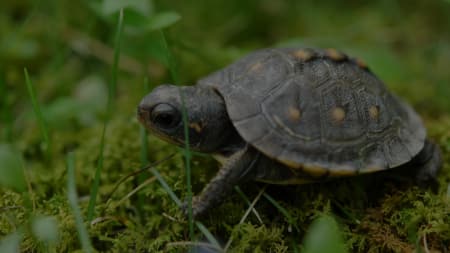
Could a turtle live outside its shell?